


SPECIALISATION / MONTHS 6–8
Five routes into motorsport engineering
Advanced teaching and a shared group project develop depth without losing the whole-vehicle perspective.
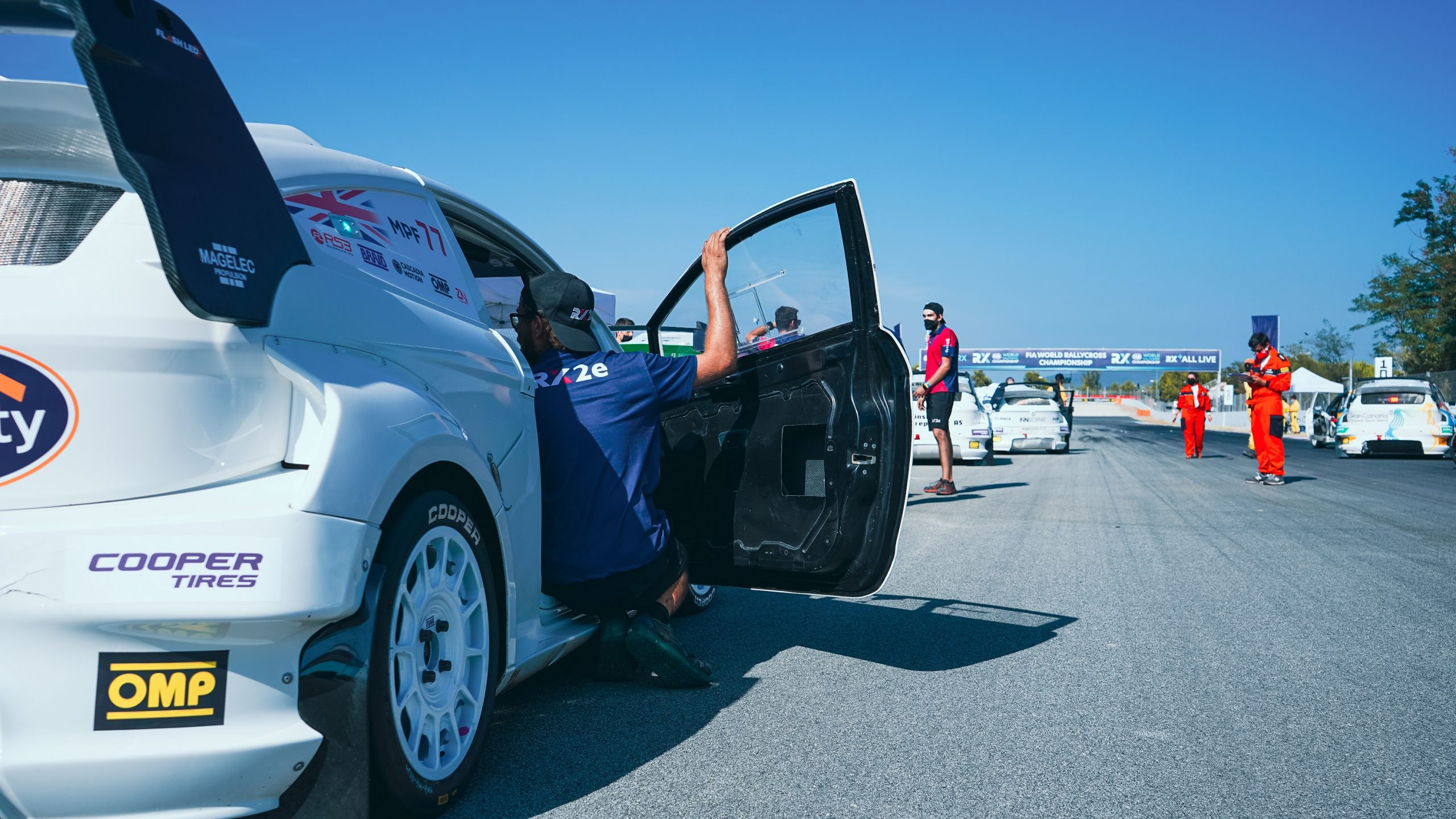
DYNA · DATA · RACE · PILO · R&D5
Race Engineering
Turn data into lap time.
| Specialist module · 4 ECTS each | Content | Assessed output |
|---|---|---|
| RE01 · Advanced vehicle dynamics & lap-time simulation | Tyre and transient-handling models; derivative-based handling analysis; suspension optimisation; lap-time model construction; setup, mass, power and aero sensitivity; correlation with measured data. | Validated handling/lap-time model; a controlled parameter study; a setup recommendation with uncertainty and correlation evidence. |
| RE02 · Driver performance, data & simulation | Driver-in-the-loop workflows; braking and corner-phase analysis; telemetry automation; simulator-to-track correlation; structured comparison of predicted and observed performance. | Repeatable driver comparison workflow and engineering debrief. |
| RE03 · Race strategy & trackside decision-making | Fuel/energy and tyre strategy; safety-car scenarios; weather crossover; experiment design; operational constraints and the use of simulation results in live engineering decisions. | Strategy model linked to the lap-time baseline, live pit-wall simulation and an individual post-event technical defence. |
Proposed depth
Proposed emphasis: connect advanced handling analysis to lap-time prediction and actual setup decisions. Use C02 and C08 as prerequisites; spend specialist time on model assumptions, sensitivity and correlation rather than repeating introductory dynamics.
Capstone contribution
Own the performance target and lap-time budget; predict, test and explain the effect of the team’s design or setup change.
Illustrative individual thesis
Quantify how tyre or aero-map uncertainty changes setup selection and predicted lap-time gains.
Industry route
Single-seater/GT teams, performance departments and simulator centres.
Possible early-career direction: Junior performance, data, simulation or race-support engineer. These are role families, not employment guarantees.
HANDS-ON WORK / YOUR PRACTICAL PROGRAMME
What you will build, measure, test and deliver
| Practical block & foundation | Student activity | Evidence you produce |
|---|---|---|
| RE01 · Vehicle setup and hardware characterisation | Measure a baseline setup and suspension geometry; characterise available dampers and brakes; record tyre and ride-height conditions; translate measurements into model inputs. | Setup sheet and traceable parameter file. |
| RE01 · Performance model and setup experiment Proposed extension | Use measured power/torque and gear-ratio data in a lap model; vary tyre, suspension and aero parameters; plan an A/B setup test and compare predicted gains with measured or approved reference runs. | Lap-time sensitivity study and a justified setup change. |
| RE02 · Instrumentation and performance data | Inspect sensors and logger channels on a car; check calibration and signal quality; download and analyse sessions in AIM RaceStudio or the approved equivalent; compare braking, cornering and traction. | Calibrated channel list, analysis workbook and driver debrief. |
| RE02 · Driver comparison and analysis automation Proposed extension | Build repeatable driver/lap overlays; automate calculated channels and report generation; investigate discrepancies between simulation and measured traces. Use an approved desktop simulator or replay dataset. | Reproducible notebook and individual coaching/engineering report. |
| RE03 · Run planning and track engineering | Prepare a run plan, setup changes and reporting sheets; practise engineer/driver briefings and timed data reviews. Execute a supervised track session when scheduled, otherwise use an approved session-replay exercise. | Run plan, decision log and post-session report. |
| RE03 · Strategy and pit-wall exercise Proposed extension | Run fuel/energy, tyre, weather and safety-car scenarios; use lap-model outputs to make time-limited strategy calls; defend the result in a simulated team review. | Strategy tool, pit-wall decision record and technical defence. |
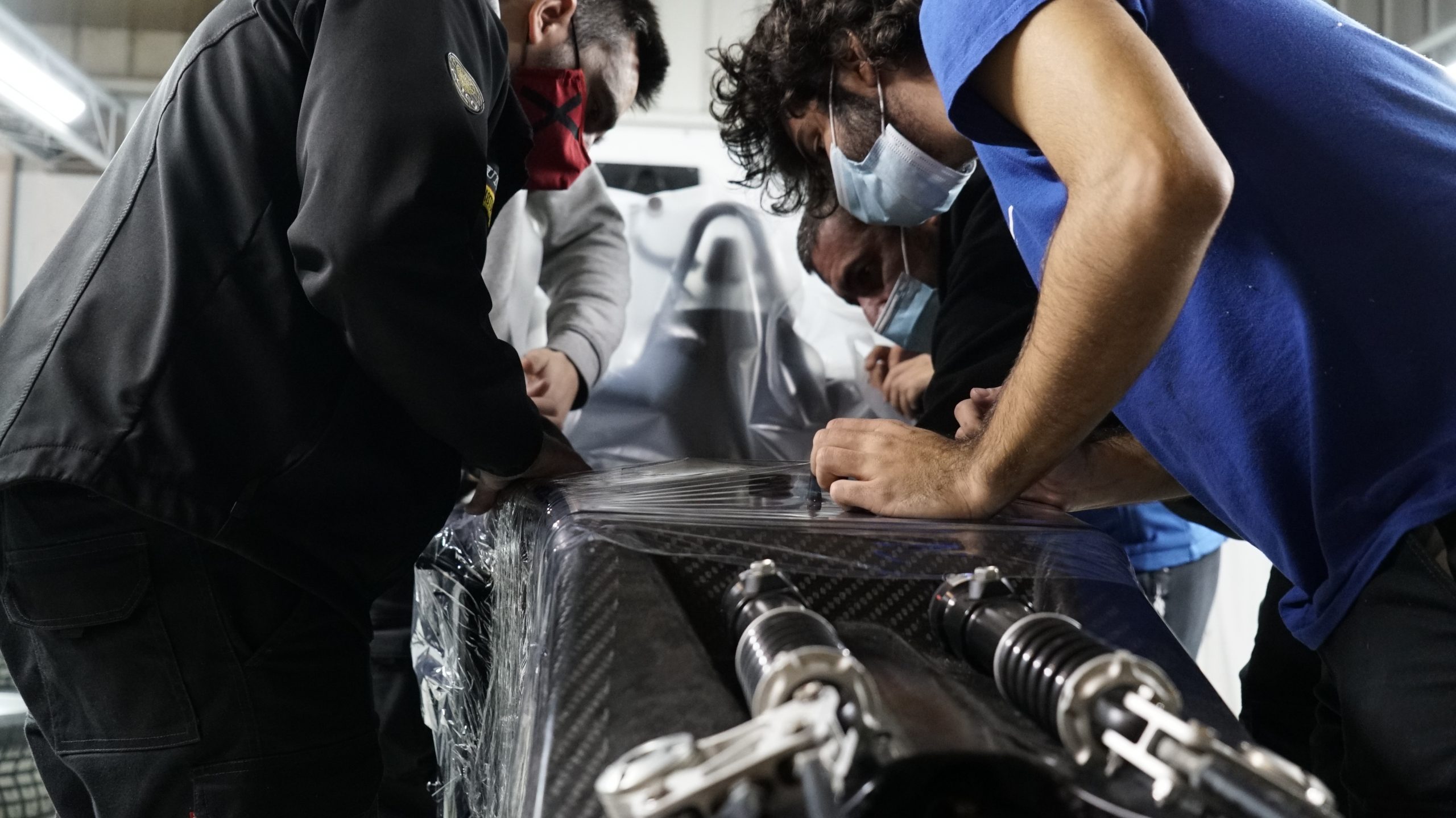
BUSI · ENGI · DRIV · ELEC · R&D1 · RACE
Race Operations & Vehicle Build
Build, prepare and deliver a reliable car.
| Specialist module · 4 ECTS each | Content | Assessed output |
|---|---|---|
| RO01 · Vehicle assembly, preparation & reliability | Build sequencing; assembly drawings; torque traceability; inspection; service life; FMEA and failure investigation. | Controlled build pack and quantified reliability improvement. |
| RO02 · Engineering business & race operations | Project planning; team leadership and role allocation; budgets and cash flow; sponsor/customer value; contract and IP awareness; scrutineering, logistics and race-event resource planning. | Costed race-programme business case, stakeholder pitch, event resource plan and technical-compliance review. |
| RO03 · Manufacturing, repair & validation | Composite repair limits; fasteners and tolerances; manufacturing-process selection; coupon/joint test planning; impact-damage inspection; acceptance criteria and release control. | Repair/process qualification report using test evidence, an inspection/replacement decision and a release-to-run dossier. |
Proposed depth
Proposed emphasis: combine build quality with commercial judgement. Cost alternative repair/manufacturing options, justify resource allocation and lead an engineering review. Legal topics are awareness exercises, not legal qualifications.
Capstone contribution
Own the delivery plan, cost/risk register, procurement and build-readiness review; deliver a validated preparation package and the team’s stakeholder pitch.
Illustrative individual thesis
Evaluate a process or reliability intervention using measured failure or build-quality data.
Industry route
Race teams, constructors, championship technical operations and vehicle-build programmes.
Possible early-career direction: Build, test, reliability or race-operations engineer; hands-on team roles. These are role families, not employment guarantees.
HANDS-ON WORK / YOUR PRACTICAL PROGRAMME
What you will build, measure, test and deliver
| Practical block & foundation | Student activity | Evidence you produce |
|---|---|---|
| RO01 · Engine and driveline build workshop | Strip, inspect and reassemble assigned engine subassemblies; measure clearances and document torques; inspect racing gearboxes, limited-slip differentials and CV joints; observe and support an instructor-led dyno run. | Build/inspection records, fault findings and a dyno-readiness checklist. |
| RO01 · Reliability and release-to-run challenge Proposed extension | Complete a bounded assembly task from drawings; trace parts and settings; investigate a seeded fault; apply FMEA and propose a maintenance interval using available evidence. | Controlled build pack, failure analysis and signed release checklist. |
| RO02 · Race-event preparation and operations | Prepare scrutineering and setup records; organise tools and spares; rehearse pit-box roles, pre-session checks, setup changes and post-run servicing in a stationary or scheduled track environment. | Event operations pack and observed practical competency record. |
| RO02 · Engineering business and event control Proposed extension | Build a costed event plan; allocate staff and equipment; respond to a repair/logistics disruption; pitch the plan to a mock sponsor/customer and review the budget impact. | Business case, resource plan and stakeholder presentation. |
| RO03 · Composite manufacture, repair and fasteners | Make a small laminate part; practise a supervised repair on a training sample; identify NAS fasteners, fit a thread insert and apply documented tightening procedures. | Manufactured sample, repair record and fastener/torque worksheet. |
| RO03 · Quality and repair validation Proposed extension | Inspect a component or repaired coupon; check dimensional acceptance and compare approved test results; decide whether to accept, rework or replace it and justify the cost/reliability trade-off. | Process qualification and evidence-based acceptance report. |

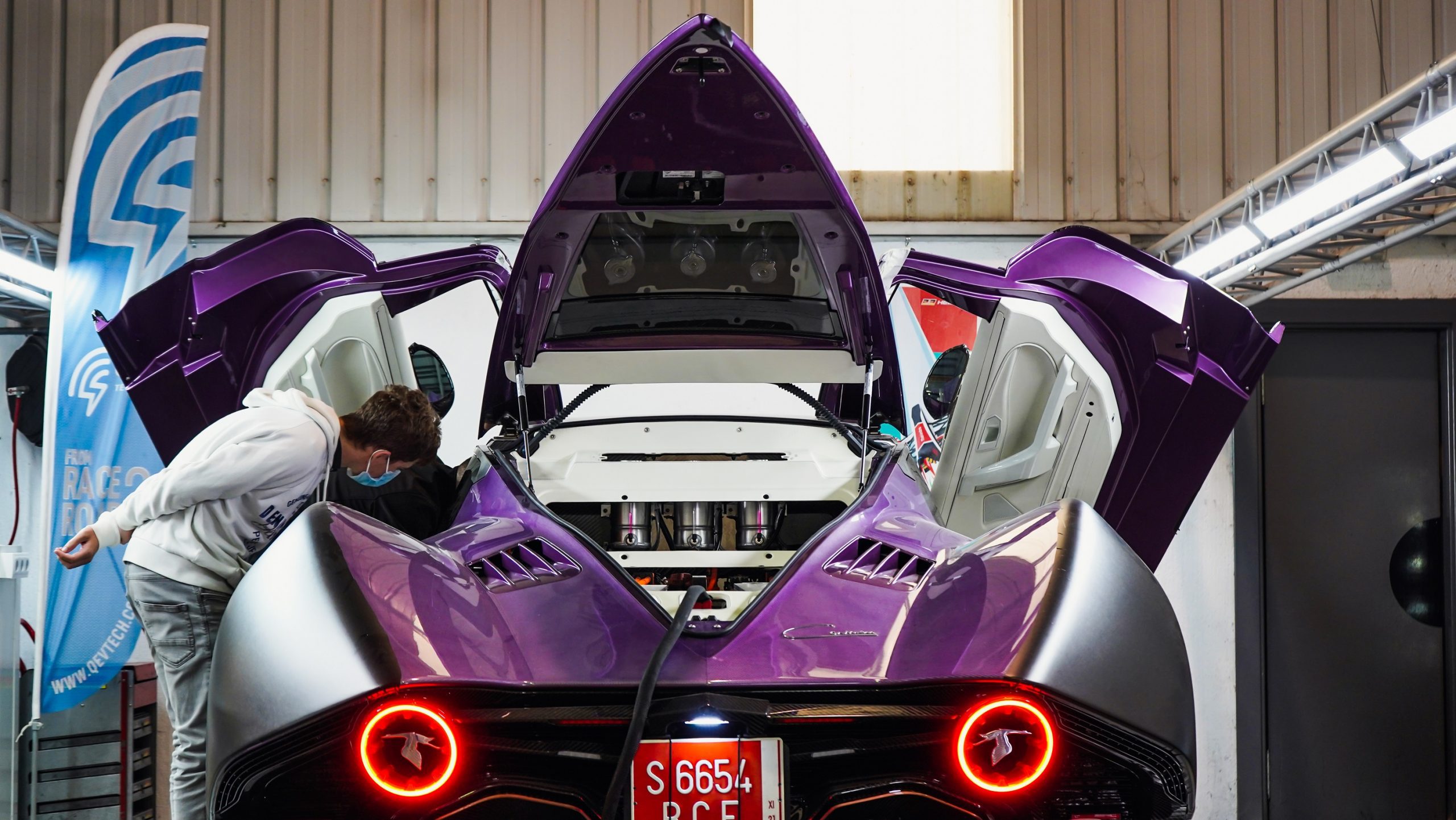
ELEC · EV&HY · H2 · DATA
EV & Mechatronic Systems
Integrate power, controls and intelligence.
| Specialist module · 4 ECTS each | Content | Assessed output |
|---|---|---|
| EV01 · Electric propulsion, energy storage & architecture | Compare electric/hybrid propulsion architectures; size motor, inverter and battery systems against a race duty cycle; retain BMS, fuel-cell and thermal integration; evaluate energy use and life-cycle trade-offs. | Architecture-selection dossier, duty-cycle energy model and component sizing; a bounded life-cycle comparison with stated assumptions. |
| EV02 · Embedded controls & vehicle networks | CAN diagnostics; sensor integration; propulsion-control design; MATLAB/Simulink; inverter/controller interfaces; calibration and closed-loop behaviour under defined operating cases. | Low-voltage bench or SIL controller demonstration, interface specification and measured/modelled control-performance assessment. |
| EV03 · System integration, safety & validation | Requirements; failure modes; HV isolation; interlocks; SIL/HIL methods; fault injection and test coverage. | Verification matrix, safety argument and controlled fault-injection report. |
Proposed depth
Proposed emphasis: make architecture choices using performance, energy, controls, safety and environmental evidence. Define the life-cycle boundary and electricity scenario; do not add a stand-alone sustainability lecture module.
Capstone contribution
Build and validate a low-voltage demonstrator of a powertrain/control subsystem.
Illustrative individual thesis
Compare energy or thermal-control strategies across a specified duty cycle, with sensitivity to architecture and energy-source assumptions.
Industry route
QEV engineering programmes, EV suppliers, constructors and electric-racing teams, subject to agreements.
Possible early-career direction: Systems, controls, electronics or electric-powertrain engineer. These are role families, not employment guarantees.
HANDS-ON WORK / YOUR PRACTICAL PROGRAMME
What you will build, measure, test and deliver
| Practical block & foundation | Student activity | Evidence you produce |
|---|---|---|
| EV01 · Battery and electric-powertrain hardware | Identify motors, inverters, BMS and auxiliaries on available hardware; study QEV battery-pack examples; practise component identification and supervised assembly/inspection on isolated training hardware. | Architecture diagram, inspection checklist and pack/component record. |
| EV01 · Energy-system sizing and validation Proposed extension | Size an electric/hybrid system for a defined duty cycle; compare predicted voltage, energy use and temperature against an approved dataset or safe bench measurements; assess a bounded life-cycle scenario. | Sizing model, validation plots and architecture trade study. |
| EV02 · Wiring, CAN and controller practical | Build a small low-voltage loom; check continuity and diagnose faults; connect sensors and inspect CAN signals; implement a simple MATLAB/Simulink–Arduino control exercise. | Harness, diagnostic log and functioning low-voltage demonstrator. |
| EV02 · Closed-loop control and calibration Proposed extension | Tune a low-voltage bench or software-in-the-loop controller; investigate saturation, sensor noise and parameter variation; document network interfaces and test response against requirements. | Control-performance report, calibration file and interface specification. |
| EV03 · Safe integration and system checks | Complete supervised HV awareness and isolation-procedure training on suitable equipment; inspect interlocks and cooling interfaces; walk through battery/motor/inverter integration and log diagnostic results. | Safety competency sign-off and integration checklist. |
| EV03 · Fault injection and verification Proposed extension | Execute a fault matrix on a low-voltage rig or SIL model; test sensor-loss and communications-failure cases; assess controller fallback and test coverage. HIL is optional if commissioned. | Verification matrix, fault-response evidence and technical review. |
R&D1 · R&D2 · R&D3 · DYNA · DRIV
Race Car Design & Packaging
Make performance manufacturable.
| Specialist module · 4 ECTS each | Content | Assessed output |
|---|---|---|
| DE01 · Vehicle architecture, aero integration & packaging | Occupant and powertrain packaging; suspension envelopes; cooling routes; serviceability and mass properties; aero-surface and duct integration; suspension/ride-height interfaces and package trade-offs. | Vehicle/subsystem package with quantified mass, serviceability, cooling and aero-interface decisions. |
| DE02 · Composite structures, suspension & impact design | Load cases, stiffness, joints and laminate design; suspension geometry and torsional rigidity; energy-absorbing concepts; material/process choices; component-level impact and test requirements. | A substantiated suspension/chassis concept plus a bounded impact-component exercise, with material choice, energy target and validation plan. |
| DE03 · Design release & manufacturing engineering | GD&T; tolerance stacks; drawing/BOM release; DFM/DFA; composite tooling and process selection; costed make/buy choices; change control and manufacturing/test acceptance criteria. | Manufacturing-ready design pack, cost/process justification and traceable acceptance criteria. |
Proposed depth
Proposed emphasis: link geometry and materials to manufacturability, crash-energy management and vehicle behaviour. Design students own requirements and concept decisions; the simulation pathway owns detailed numerical impact verification.
Capstone contribution
Design and validate a suspension, cooling or chassis subsystem within a shared vehicle package.
Illustrative individual thesis
Investigate a composite joint, suspension or energy-absorbing component using design, analysis and appropriately scaled test correlation.
Industry route
Constructors, OEM engineering offices, composite suppliers and design consultancies.
Possible early-career direction: Mechanical design, packaging, chassis or composite-design engineer. These are role families, not employment guarantees.
HANDS-ON WORK / YOUR PRACTICAL PROGRAMME
What you will build, measure, test and deliver
| Practical block & foundation | Student activity | Evidence you produce |
|---|---|---|
| DE01 · Physical-to-CAD vehicle packaging | Inspect an available vehicle/subsystem; measure hard points and interfaces; build a CATIA/3DEXPERIENCE package and E-BOM; estimate mass properties and check service access. | CAD assembly, interface drawing, E-BOM and mass-property sheet. |
| DE01 · Packaging and airflow design challenge Proposed extension | Develop a suspension, powertrain or cooling package within fixed envelopes; check clearances, duct routes and ride-height interfaces; compare physical measurements with the digital design. | Packaging trade study and coordinated design-review pack. |
| DE02 · Composite part and structural concept | Produce a small composite part and inspect its quality; compare laminate/material choices; derive chassis or suspension loads and build a basic structural model from an assigned component. | Manufactured sample, lay-up record and structural substantiation. |
| DE02 · Suspension and impact-component design Proposed extension | Optimise a bounded suspension/structural concept; define stiffness and energy-absorption targets; create a small impact-component concept and compare analysis with coupon/reference evidence. | Design calculations, model checks and component test plan. |
| DE03 · Design release and manufacturing review | Release a part/assembly with drawings and BOM; review accessible QEV hardware against the CAD model; identify manufacturing constraints, joint details and assembly sequence. | Controlled design-release pack and manufacturing review. |
| DE03 · Tolerance, cost and fit-up verification Proposed extension | Perform a tolerance stack; make or use a simple available mock-up to check fit and access; assess tooling and make/buy options; issue a controlled engineering change. | Fit-check evidence, cost/process justification and revised drawing pack. |
R&D3 · R&D4 · R&D5 · DYNA
R&D Simulation
Model. Verify. Correlate.
| Specialist module · 4 ECTS each | Content | Assessed output |
|---|---|---|
| SI01 · Structural FEA & explicit impact modelling | Load cases; implicit versus explicit solution choice; composite behaviour; contact, time-step and mesh sensitivity; impact energy balance; structural convergence and model-to-test correlation. | Verified structural model and a small impact-model study, including energy checks, numerical sensitivity and comparison with test/reference evidence. |
| SI02 · Advanced vehicle aerodynamics & thermal simulation | External flow, ground effect and aero maps; brake/cooling ducts; thermal networks; CFD boundary conditions and sensitivity; experiment design; critical evaluation of aerodynamic research and correlation data. | CFD/thermal investigation with an experimental/reference comparison, uncertainty assessment and a concise critical literature review. |
| SI03 · Vehicle dynamics, lap-time models & optimisation | Vehicle-dynamics and lap-time models; parameter identification; suspension sensitivity; DOE and surrogate methods; automated trade studies linking structural/aero changes to vehicle performance. | Reproducible optimisation workflow that translates a subsystem change into a justified whole-vehicle performance recommendation. |
Proposed depth
Proposed emphasis: choose and verify the right numerical method, correlate against independent evidence, and quantify how uncertainty changes a design decision. Detailed research depth belongs in one bounded case, not full-vehicle crash certification.
Capstone contribution
Deliver a correlated aero, structural, impact or vehicle model, and explain its effect on the team’s design and performance target.
Illustrative individual thesis
Quantify simulation uncertainty and its impact on a specific design decision.
Industry route
Engineering consultancies, constructors, OEMs and simulation departments.
Possible early-career direction: CAE, CFD, structural simulation, thermal or development engineer. These are role families, not employment guarantees.
HANDS-ON WORK / YOUR PRACTICAL PROGRAMME
What you will build, measure, test and deliver
| Practical block & foundation | Student activity | Evidence you produce |
|---|---|---|
| SI01 · Structural model from a real component | Measure an available component; derive loads; create and mesh the CAD geometry; run a structural solution using the approved CAE software and review the result against physical/reference evidence. | FEA model, boundary-condition justification and correlation note. |
| SI01 · Explicit impact and numerical verification Proposed extension | Build a small coupon/component impact model; assess contact, mesh/time-step sensitivity and energy balance; compare with supplied test data or a safely approved small-scale test. | Impact-model verification dossier and limitations statement. |
| SI02 · CFD and cooling workflow | Prepare a race-car component or duct geometry; create mesh and boundary conditions; run CFD; compare force or flow estimates with available measurements/reference data. | CFD case, convergence record and first correlation report. |
| SI02 · Aerodynamic and thermal experiment Proposed extension | Design a bounded airflow/cooling study; use approved pressure, temperature or tuft observations where feasible; assess mesh/model uncertainty and compare against the CFD prediction. | Experimental plan, correlation plots and critical technical report. |
| SI03 · Vehicle and suspension model | Build vehicle and tyre models from measured/assigned data; simulate suspension, steering and weight distribution; investigate clearance/interference and development changes. | Parameterised vehicle model and baseline verification. |
| SI03 · Automated performance optimisation Proposed extension | Run a design-of-experiments study; connect structural/aero/thermal parameters to lap-time or vehicle-response metrics; script the analysis and rank robust solutions. | Reproducible study, uncertainty assessment and design recommendation. |
Strengthen the work inside each module.
Each pathway contains 12 ECTS of specialist modules. Advanced topics deepen existing assignments and replace repeated foundation content. The group capstone has a separate 8 ECTS assessment, bringing the specialist phase to 20 ECTS.
| Pathway | Supervised practical focus |
|---|---|
| Race Engineering | handling/lap-time correlation; driver-data/simulator work; race-strategy exercises. |
| Race Operations & Vehicle Build | build/reliability validation; resource-planning and business-case workshops; manufacturing/repair test evidence. |
| EV & Mechatronic Systems | architecture and energy-model work; controls bench/SIL work; integration and fault-validation exercises. |
| Race Car Design & Packaging | packaging/aero-interface reviews; chassis/suspension and bounded impact-design work; design-release/manufacturing reviews. |
| R&D Simulation | structural/impact-model verification; CFD/thermal correlation; vehicle/lap-time optimisation. |
Each module focuses on one principal engineering case. Topics requiring further depth can be developed through the capstone or individual thesis.
Confirm the pathway before the specialist phase.
| Stage | Action |
|---|---|
| Admission | Collect first and second choices; publish minimum viable numbers and capacity before deposits. |
| December 2027 | Run tasters; review technical evidence; forecast placement demand by pathway. |
| January 2028 | Confirm a place in one pathway, its tutor, software and aligned industry capacity. |
| If a pathway cannot run | Offer an agreed alternative or a defined deferral/refund route. Do not silently move students after enrolment. |
Planning assumption: 25 students, approximately five per pathway; minimum four per track remains a proposed viability threshold. Actual allocation follows capacity and student suitability. Shared methods clinics may combine pathways, but specialist learning outcomes and assessment remain distinct.
25 STUDENTS. ONE FOCUSED COHORT.
Your next chapter starts
with your interest.
Master’s applications open 1 January 2027. Results by 15 April.