


PROJECTS & INDUSTRY / MONTHS 6–12
Prove capability through real engineering
A group capstone establishes collaborative delivery. The internship develops professional practice. The thesis demonstrates independent research.
One engineering brief. Distinct individual contributions.
Five teams.
Five students per team.
A validated engineering result.
February–April 2028 · 200 hours per student, concurrent with the 12 ECTS specialist modules. Together these form the 20 ECTS specialisation phase. The capstone comprises 80 supervised studio hours, 20 academic-supervision hours and 100 independent hours. Each team integrates the available pathway skills. A five-discipline team is preferred, but project scope must work with the actual cohort mix.
Proposed brief: race-car performance and development package
Use an existing QEV vehicle or approved reference platform. Improve a bounded subsystem or performance target, such as cooling, suspension, energy management or race preparation.
Agree measurable targets for performance, mass, reliability, cost and compliance. Build a baseline, evaluate alternatives, produce a design or workflow, and validate the result with bench, workshop, simulator or track evidence.
A full new vehicle build is outside the default scope. A track day is optional; a funded bench or simulator validation route must always exist.
| Gate | Timing | Required evidence |
|---|---|---|
| G0 · Brief and interfaces | February · weeks 1–2 | Requirements, baseline, roles, project plan, risk register, budget and a concise stakeholder/business case |
| G1 · Concept review | February · weeks 3–4 | Trade study, initial model, interface definitions, test plan and costed design/process options |
| G2 · Design review | March · weeks 5–8 | Design/model maturity, verification evidence, prototype or process readiness |
| G3 · Validation and handover | April · weeks 9–12 | Measured or independently checked result, limitations, technical report, cost/value review, stakeholder pitch and individual viva |
Make the advanced topics work together.
For a suitable brief, Race Engineering sets the lap-time objective; Design owns packaging, load paths and material decisions; Simulation verifies aero, structural or dynamic performance; EV & Mechatronics evaluates energy and controls; Operations owns build quality, resources and the stakeholder case. Each team selects the work relevant to its brief rather than attempting every discipline in full depth.
Reuse models and data with documented provenance, but do not resubmit the same work for a second credit award. Specialist assessments demonstrate individual methods; the capstone assesses new integration and validation. Thesis work must still add a distinct research question and evidence.
Use the placement context to answer a research question.
May–August 2028 · 300 hours per student. Each thesis has its own question, literature review, method, critical analysis, limitations and oral defence. It may develop a capstone theme, but must add a distinct investigation and new evidence.
| Milestone | Deliverable |
|---|---|
| May | Confirm question, supervisor, host data access and ethics/IP conditions; approve research plan. |
| June | Complete critical literature review, baseline model and method/pilot study. |
| July | Run analysis or experiments; evaluate uncertainty, repeatability and industrial significance. |
| August | Submit dissertation and reproducible technical evidence; complete individual viva. |
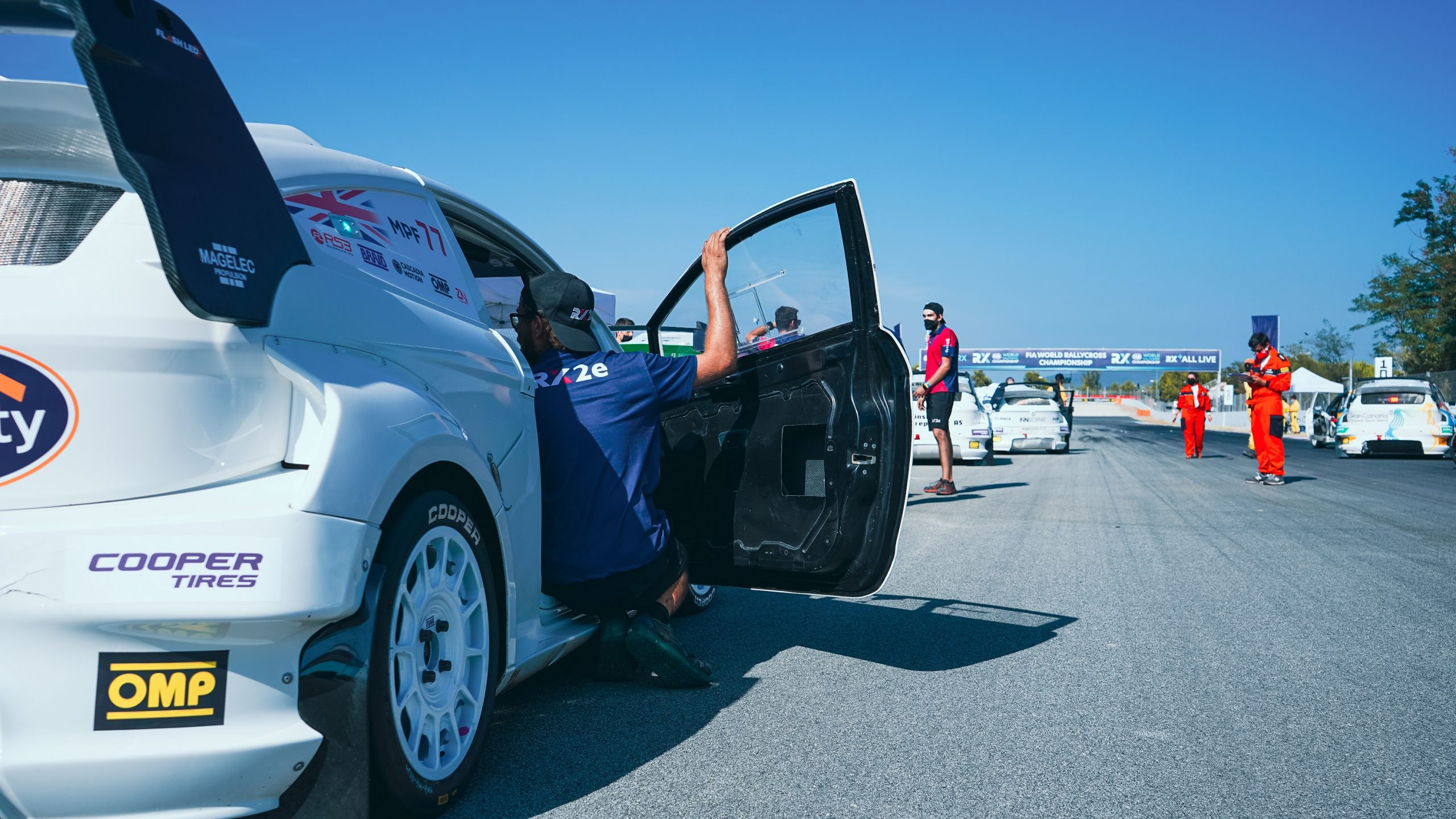
Your internship is part of the programme.
GUARANTEED INTERNSHIP · ENROLLED STUDENTS
Every selected and enrolled student who meets the published academic, attendance, conduct and legal eligibility conditions will receive a guaranteed, supervised internship with a race team or motorsport engineering operation — on track or in the factory. The four-month industry phase totals 30 ECTS: an 18 ECTS / 450-hour internship plus a separate 12 ECTS / 300-hour individual thesis. Placement work is aligned with your specialisation.
The guarantee covers an eligible placement. It does not promise a named employer, a paid role, a particular championship or subsequent employment.The internship guarantee is the proposed programme commitment and will be set out in the enrolment agreement. Named hosts and capacity must be secured before unconditional offers. Matching considers your pathway, readiness, language and legal eligibility.
Eligibility for internship
- Maintain a CGPA of at least 7.0 throughout the programme.
- Achieve A2-level spoken Spanish before the internship period begins.
Spanish speaking proficiency helps you communicate in the workplace and gives you the best chance of converting your internship into a full-time job.
| Required element | Proposed operating rule |
|---|---|
| Academic readiness | Maintain a CGPA of at least 7.0 throughout the programme. Pass the 40 ECTS foundation and 20 ECTS specialisation phase (12 ECTS specialist modules plus 8 ECTS capstone); complete all safety checks before placement. |
| Attendance and conduct | Proposed minimum 90% of mandatory scheduled activities, with approved absences made up; safety sessions require full completion. University rules and reasonable adjustments apply. |
| Language | Teaching and assessment are in English. Achieve A2-level spoken Spanish before the internship period begins. This supports workplace communication and improves your chances of converting the internship into a full-time job. |
| Legal eligibility | Confirm host-country work/placement permissions, enrolment, insurance and required registration. A student visa must not be assumed to authorise every placement. |
25 STUDENTS. ONE FOCUSED COHORT.
Your next chapter starts
with your interest.
Master’s applications open 1 January 2027. Results by 15 April.